
How Hot Is Too Hot for Corn?
We all know a heat wave isn't great for corn. But what's actually happening out there when the temperature climbs? According to Branden Furseth, Product Manager at AgVenture, the real damage often isn't where growers think it is.
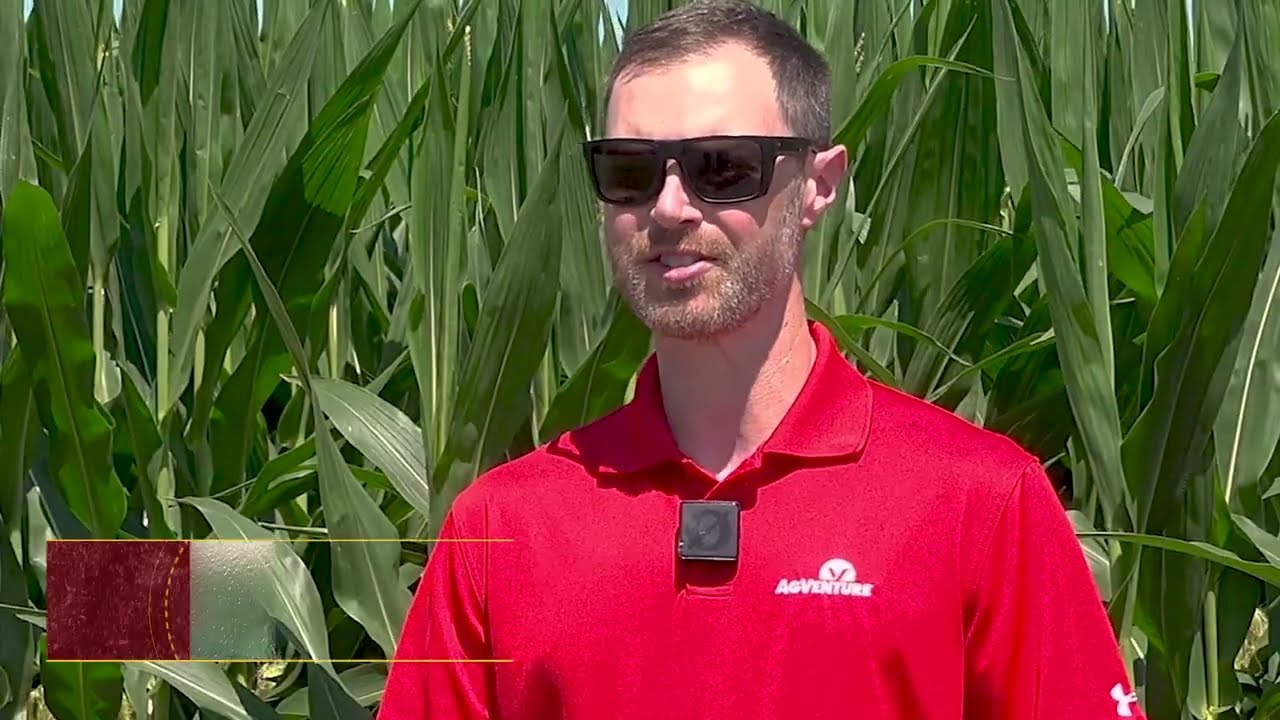
How Hot is Too Hot for Corn?
Branden Furseth, AgVenture portfolio & technology leader, talks about the impact extended heat has on corn.
How Hot is Too Hot for Corn?
Branden Furseth, AgVenture portfolio & technology leader, talks about the impact extended heat has on corn.
The pollination myth
When the mercury spikes during pollination, it's easy to assume the worst. Furseth says that fear is mostly overblown.
"It's very common during periods of heat stress to think that pollination is the primary effect there," he says. "There's a little bit of truth to that, but normally we can escape that because the plants are primarily shedding pollen during the morning … and then again in the evening for a secondary pollen shed window."
Spread that pollen shed out over several days, and heat-related pollination problems turn out to be pretty rare.
Where the real trouble starts
The bigger issues come from two directions. The first is inside the plant itself. Corn relies on an enzyme called RuBisCO to fix carbon and build sugars. "When we get above 86 degrees that enzyme starts to shut down, and essentially we aren't creating sugars and energy within the plant," Furseth explains. In other words, the factory slows down right when the plant needs energy most.
The second is water. Heat and drought are technically two different stresses, but they gang up fast. "When we go from 80 degrees up to 95, we're actually doubling the water demand of that crop," he says – meaning even well-watered fields can suddenly start acting droughty.
Read the leaves, not the thermometer
Here's the part Furseth calls the silver bullet: leaf temperature matters more than air temperature. Thanks to evapotranspiration, "we typically see the leaves stay 5 to 10 degrees cooler than the ambient air temperature." A well-watered crop is a happy crop.
The visual cues are hard to miss, like that "pineapple top" leaf curling you spot from the road, and leaves fading to a pale white. Furseth reminds growers it's actually the plant protecting itself. "The plants need to do this to close up their leaves and conserve water," he says. Not what you want to see, but a sign the plant is defending itself. And watch the wind, which can pull moisture out even faster.
Planning ahead
You can't control the weather, but you can control genetics. In drier regions, AgVenture offers hybrids with high drought tolerance ratings built to hold onto yield potential when conditions turn tough – so your crop has a head start before the heat ever shows up.
At the end of the day, managing heat and drought stress is about knowing what to watch for and having a plan before the forecast turns against you. Keep an eye on your fields, keep your crop well-watered where you can and don't second-guess the plant when it starts curling up to protect itself.
And if you're wondering which hybrids fit your ground, or how to match drought tolerance ratings to your toughest acres, that's exactly the kind of conversation worth having with your AgVenture ISC. A little planning now can make all the difference when the heat is on.